Understanding the numbers
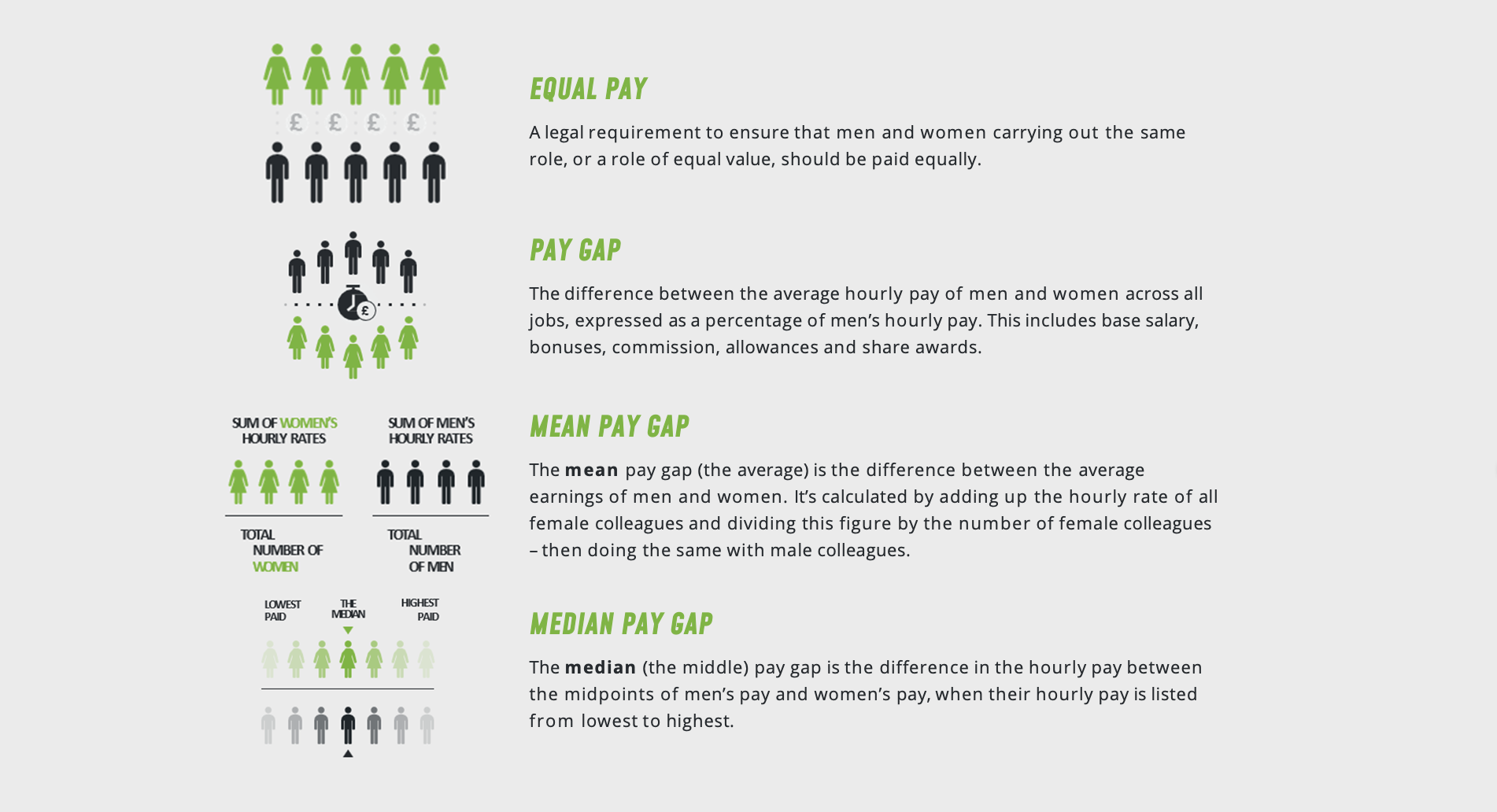
It’s important to remember that the gender pay gap and equal pay aren’t the same thing. The gender pay gap looks at the difference between the average pay of all men and women across an organisation, regardless of seniority or job role. Whereas equal pay looks at the pay difference between a man and women doing the same role.
Our gender pay
& bonus gap
Our goal is to close our pay gaps. To do this, we have three main areas of focus which continue to form the backbone of our strategy:
- Hiring – consistently broadening our hiring practices to be more inclusive;
- Allyship – including sponsoring events and running inclusive communication training;
- Development – continuing to support and prioritise under-represented colleagues.
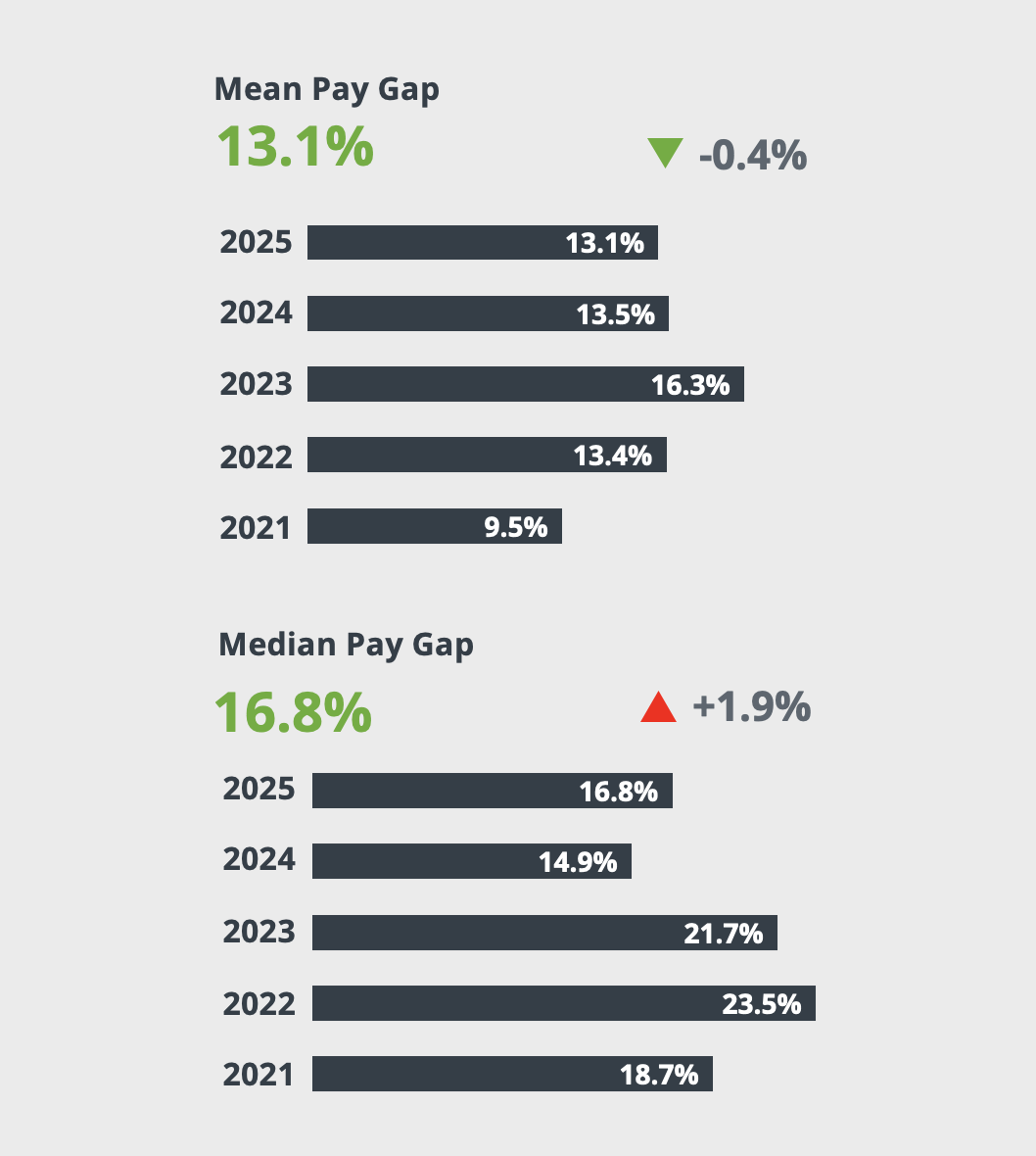
This year, we have seen a slight improvement in the mean gender pay gap, which has narrowed marginally by 0.4%, taking us from 13.5% to 13.1%.
However, if we look at the median gender pay gap, we can see it has widened this year, from 14.9% to 16.8%, demonstrating an increase of 1.9%.
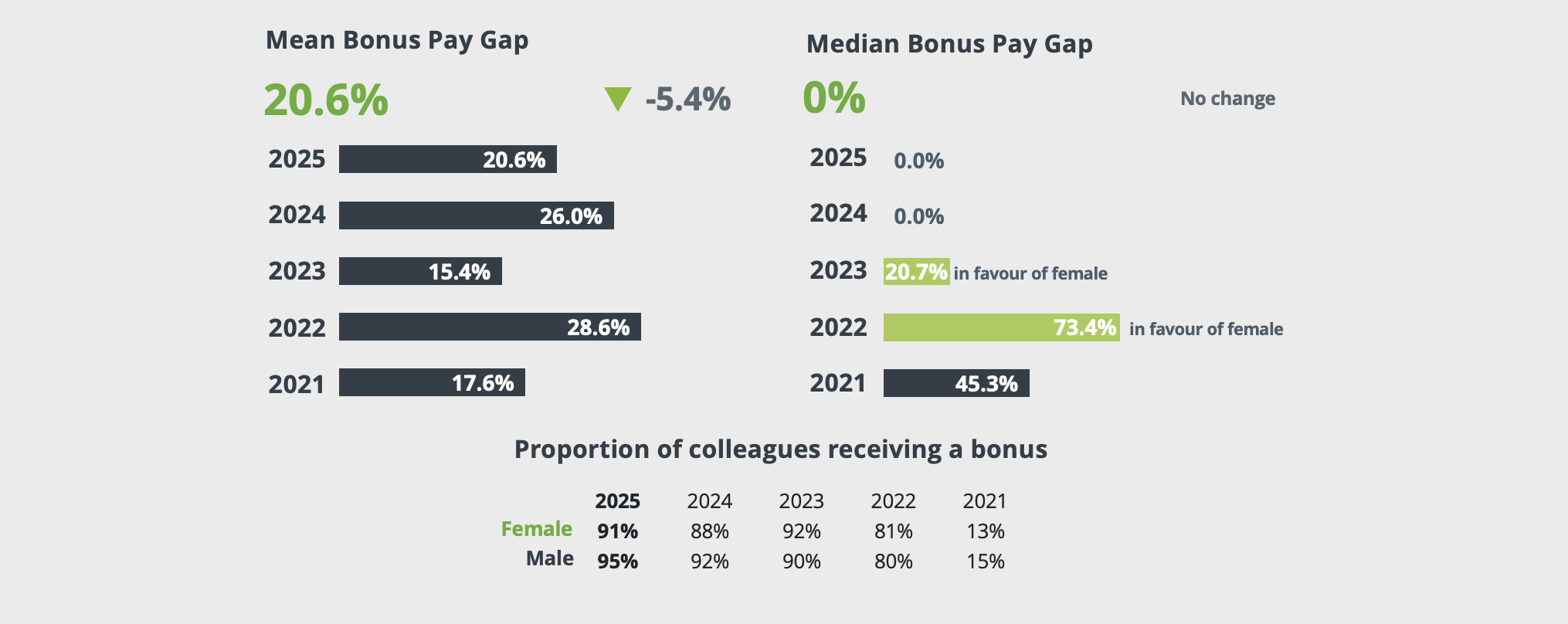
The mean gender bonus gap has improved, narrowing by 5.4%, and the median gender bonus pay gap remains unchanged at a neutral 0%.
So what has impacted the numbers?
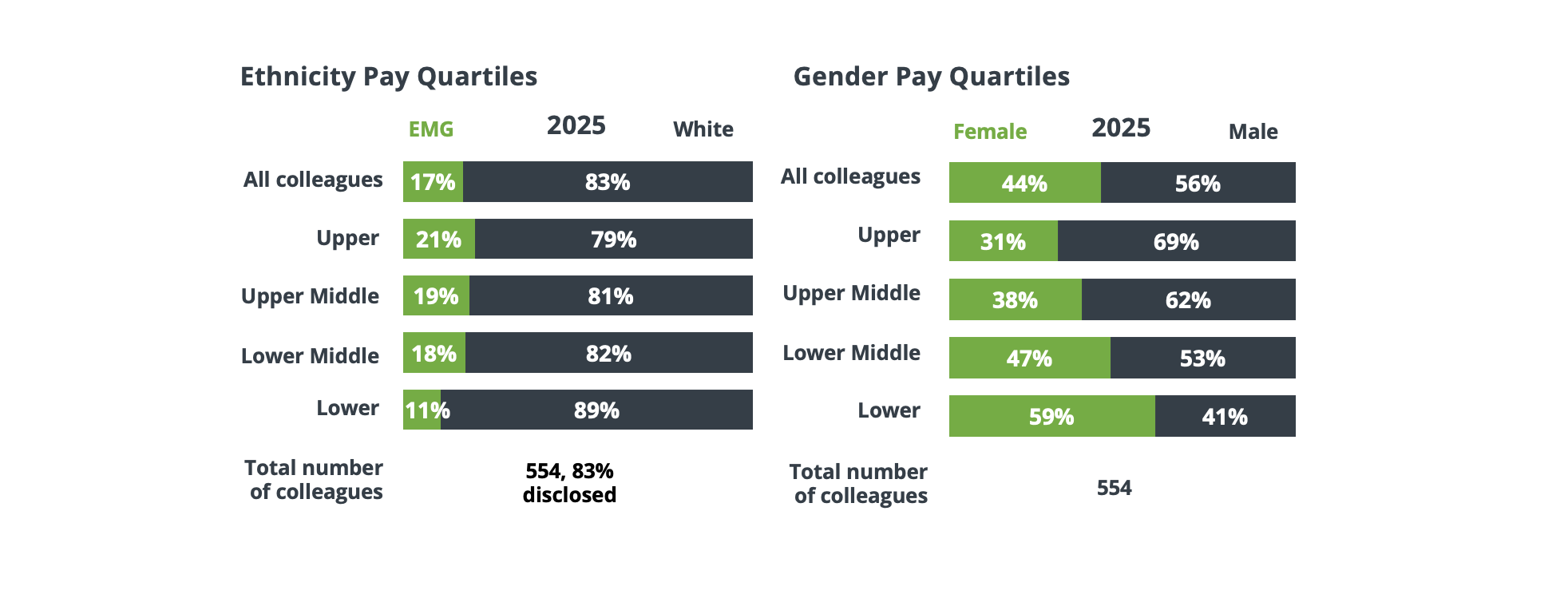
As always, there are a number of factors that impact our data. Over the past 12 months, MONY Group has shifted in shape, with a 12% reduction in our total headcount compared to the previous period. Part of this change has resulted in the representation of women in our lowest pay quartile reducing by 2%, which has in turn had a positive impact on the gender pay gap.
The mean bonus gap is sitting at 20.6% in favour of men; this is due to the higher proportion of men to women in our most senior roles. However, this does demonstrate a 5.4% change in favour of women since 2024.
The median bonus gap is at a neutral 0% once again; this is because the median-positioned male and female colleagues this year were both participants in the ‘company’ bonus scheme, just as they were last year.
It's important to remember that we have two core bonus schemes. The ‘company’ bonus scheme is linked to company performance alone, and all colleagues receive the same equivalent amount.
Our ‘personal’ bonus scheme payout, however, which is for more senior colleagues, changes depending on salary and is linked to company and personal performance combined.
As has been our strategy for several years, we’re continuing to focus on increasing the number of women in our most senior roles. In the 12 months leading up to 5 April 2025, we’ve seen a greater proportion of women hired into the Group, with 54% of our new hires being women, compared to 48% in 2024. Of those hired, 48% were recruited into the upper and upper-middle pay quartiles, showing an increase of 26% on 2024.
We’re proud to hold our position as first in the Technology sector on the FTSE Women Leaders Review report for the fifth year in a row. We also ranked fifth in the Inclusive Top 50 UK Employers List.
The initiatives we have in place are having a real, tangible impact on our colleagues. For example, feedback has been that members of our 50-strong Female Leadership Forum community find it ‘inspiring and empowering’ to be a part of. We know what we’re doing resonates with our colleagues, and so we’ll keep that momentum going. However, we know there’s still progress to be made which is why we’ll keep listening and using the data to improve.
Our ethnicity pay & bonus gap
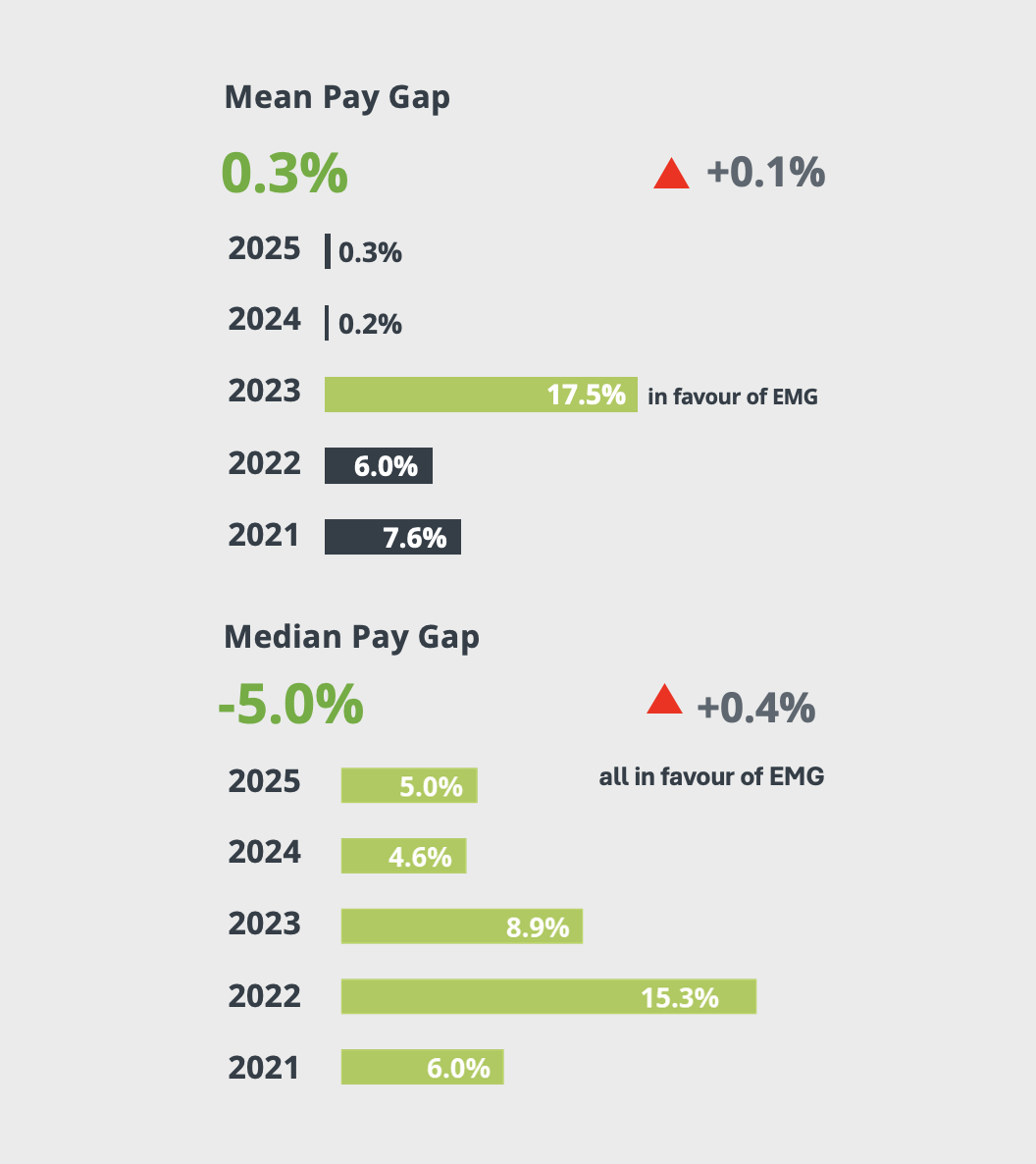
This year we’ve seen some small shifts in our numbers. The mean ethnicity pay gap has marginally widened from 0.2% to 0.3%, but this still means we’re sitting in a neutral position. The median has also widened slightly, increasing from 4.6% in favour of colleagues from an ethnic minority group, up to 5% in favour.
Our organisation has changed shape during the reporting period and part of these changes has resulted in the representation of colleagues from ethnic minority backgrounds in the upper pay quartiles increasing significantly.
According to those who have disclosed their data, which is 83% of colleagues, those within an ethnic minority group make up 17% of the business. This represents a 4% increase on last year and compares with 18% of the population of England and Wales, according to the latest Census data.
For consistency, we use the same principles and methodology as our gender pay gap when calculating the ethnicity pay gap figures. We remain committed to broadening representation across all career levels and increasing the numbers across our organisation.
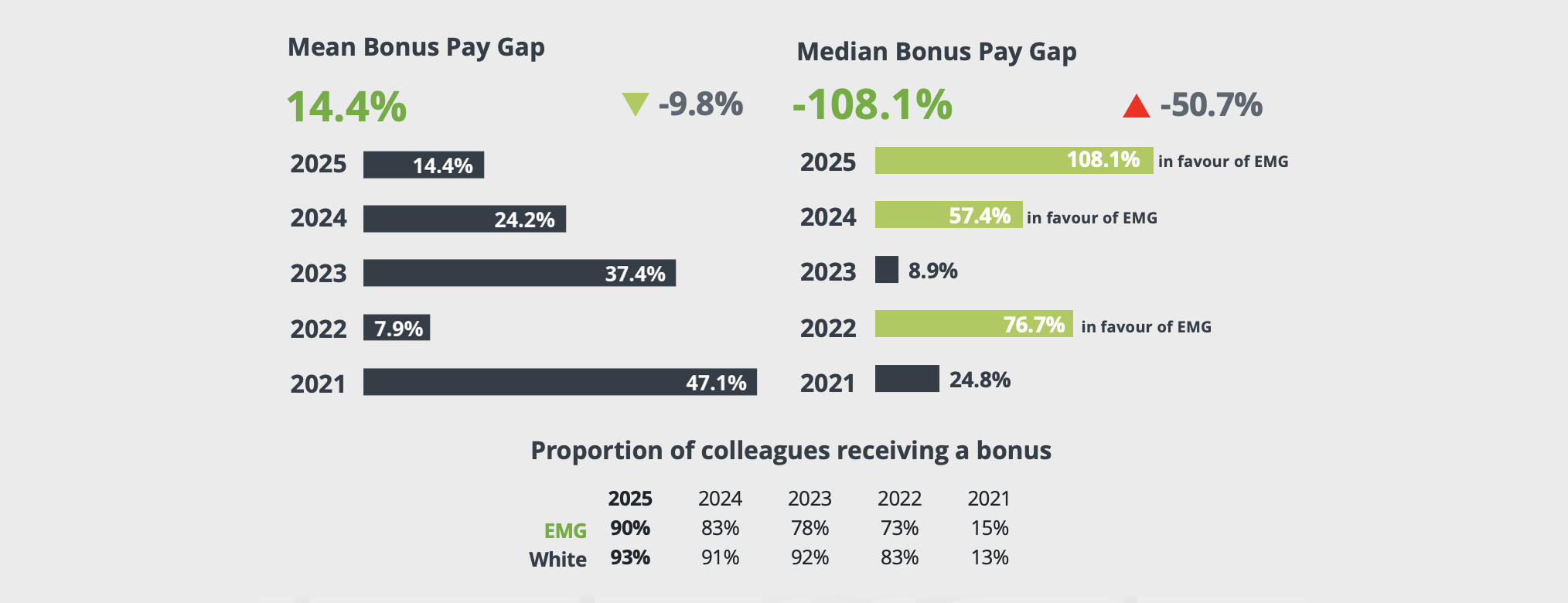
The median bonus gap is at 108.1% in favour of ethnic minority group colleagues. This is compared to 57.4% in favour of this group in 2024, meaning it’s even more so in favour of colleagues from an ethnic minority group.
The reason for this large swing is that our median positioned colleague from an ethnic minority background was on the ‘company’ bonus scheme but also received an additional payment from an internal colleague competition. This has resulted in a larger total bonus package and created a bigger shift this year. If we were to calculate with only the annual bonus schemes and not include additional incentives, the median would be 0%.
Our mean bonus gap has narrowed this year, from 24.2% to 14.4%.
90% of colleagues from an ethnic minority group received a bonus in 2025, which is up on 83% in 2024. The number of white colleagues receiving a bonus in 2025 has also increased by 2% from 91% to 93%.
Overall, our percentages have been moving in the right direction towards a neutral position of 0% since we began voluntarily reporting on our data five years ago. We still see fluctuations due to our small population size, but are confident the work we’re putting in will continue to help us make positive changes.
How we’re working to make positive change
We’re continuing the initiatives that have proven to improve the gender and ethnicity representation across our organisation, and at the same time we're making sure our approach to pay gap reporting remains meaningful, data-driven, and rooted in fairness and accountability.
Through allyship
Earlier this year, we ran a series of focus groups during Race Equality Week and, as a result, created the new Race and Ethnicity Employee Working Group, known as RAE. Its aim is to create a space for connection, support, and action, where people of all racial and ethnic backgrounds feel seen, heard, and able to be themselves.
We continue to invite more experts in the fields of diversity and learning into our organisation, including a panel discussion organised by our Employee Resource Groups with external speakers to mark Black History Month.
Panellists included Dr Ronx Ikharia (they/them), an award-winning, trans non-binary emergency medicine doctor, and Louise Lyons-Appiah from Synjkora Consulting, who empowers organisations to move beyond performative gestures and build cultures rooted in belonging, equity, and care.
We are also continuing our sponsorship and participation in key events such as Black Business Week and Black Inclusion Week, both of which we sponsored earlier this year.
To celebrate Pride Month, we invited colleagues to choose local LGBTQIA+ charities to receive £500 grants. We also hosted a virtual Pride celebration with guest speaker Ellen Jones-author, strategist, and award-winning campaigner recognised as one of the UK's leading voices on inclusion.
In partnership with I Am Paying Attention, we ran a virtual neurodiversity event exploring the theme “Superpower vs Support” and encouraged colleagues to share their experiences with ADHD. The session provided practical strategies to move beyond labels and foster inclusion through curiosity, flexibility, and tailored support.
Neurodiversity masterclasses have also been introduced, designed specifically for people managers. These sessions provide practical tools to help this community better understand neurodivergent colleagues, avoid unintentional exclusion, and lead with empathy to create a culture where everyone can thrive.
Our Women in Tech Employee Resource Group ran a session on hormone hacking with Caroline Canty, who explained how women can tap into a whole new level of productivity, confidence, and performance in the workplace.
We also stand by our commitment to offering flexible working, asking colleagues to spend 40% of their time in our offices and the rest wherever it works best for them. We know women are more likely to shoulder unpaid caregiving responsibilities, so this helps remove some barriers for them at work.
Through development
This year, we kicked off another cohort of our mentoring programme (active since 2022) and provided access to one-to-one external coaching with Ezra. Eighteen colleagues have joined the scheme this year, 55% of whom are women.
We also offer tailored coaching for mothers returning from maternity leave, supporting their transition back into the workplace.
We continue to build our Female Leadership Forum (launched in 2024), giving female leaders access to keynote speaker events and networking opportunities to curate a strong internal community.
Events with speakers such as Bianka Miller-Cole, a personal brand expert, left attendees commenting that they felt they had a “huge network of people to draw upon” and that it was “fantastic to have the actionable insights to take away from the event”.
This year, the Forum also sponsored the Smart Works ‘Women into Work’ event, a charity initiative that supports women in gaining employment and succeeding in their return to the workplace following unemployment.
We marked Learning at Work Week by curating content from our LinkedIn library that linked to themes of community, growth, and reflection during Mental Health Awareness Week.
We ran Inclusive Communication workshops to help colleagues recognise the impact everyday interactions have on inclusion. Through interactive exercises and practical frameworks, participants built the confidence to communicate in ways that support equity, respect, and belonging.
Through hiring
We focus on direct hiring rather than relying on agencies, which allows us to build diverse shortlists for roles at all levels. We also actively seek talent from underrepresented groups, often headhunting on LinkedIn.
Our partnership with Flexa Careers further establishes us as a company that embraces flexibility to drive diversity hiring.
We use Textio (an AI tool) to refine our job adverts and ensure we use inclusive language. It highlights biased or exclusionary terms and suggests alternatives, making our roles more attractive to a wider audience.
Our meeting rooms are designed to be accessible and to create inclusive interview environments, featuring dimmable lights and soundproofing for a comfortable, distraction-free setting. We also offer hearing loops to support people with hearing aids.
We confirm that the gender and ethnicity pay calculations are accurate and meet the requirements of the legislation.